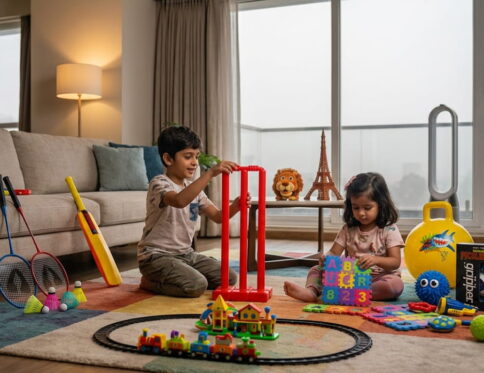


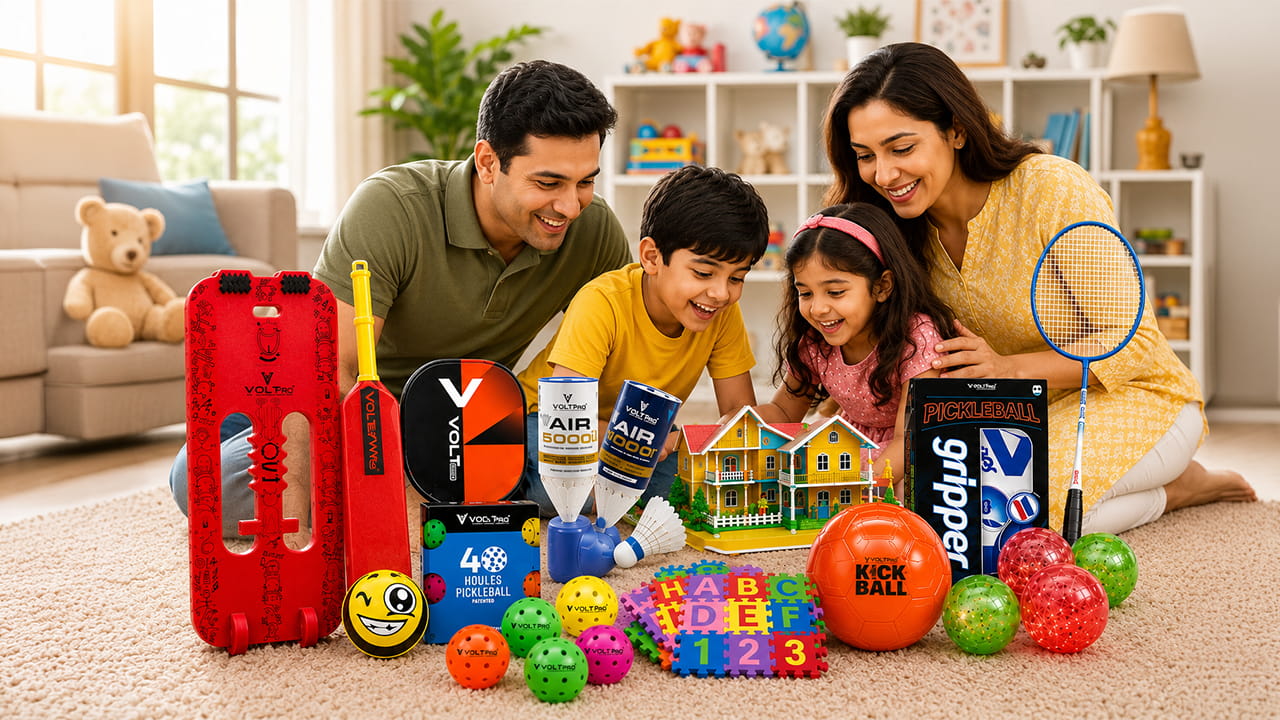
Every toy aisle has the same trap: something looks fun, the price feels right, and the packaging is covered in words like “educational” and “safe for kids.” None of that actually tells you whether the toy has been tested for the things that matter, choking risk, toxic paint, a battery compartment your toddler can pry open in ten seconds. This toy safety guide walks through exactly what to check before you buy, whether you’re shopping in a store, scrolling a marketplace app at 11 PM, or picking up a gift for someone else’s child. None of these checks take more than a minute, and together they catch almost everything that actually sends a toy to the emergency room instead of the toy box.

What Should You Check First, Before Buying Any Toy?
Quick answer: Look for the BIS/ISI safety mark, confirm the age recommendation actually matches your child (not just their interests), inspect for small or detachable parts, check how any batteries are secured, and look closely at the paint and material quality. Five checks, about ninety seconds, and you’ve ruled out the vast majority of things that cause real harm. We’ll go through each of these properly below, including the ones almost nobody actually checks.
2025 BIS updated its core toy safety standard (IS 9873, Part 1) this year, adding stricter speed limits for ride-on toys and revised noise limits. A toy bought even two years ago may already be out of step with the current rules.
Why Is the BIS/ISI Mark Non-Negotiable in India?
Because, legally, a toy without it shouldn’t be on the shelf at all. Under the Toys (Quality Control) Order, BIS certification has been mandatory since 2020 for every toy sold in India intended for children under 14 electric or non-electric, locally made or imported. Non-electric toys are tested against the IS 9873 series; electric and battery-powered toys also need to meet IS 15644 for electrical safety. The certificate confirms a toy has actually been lab-tested for mechanical strength, choking-hazard small parts, paint and material toxicity, and flammability, not just inspected for looking sturdy. This isn’t a paperwork formality. In a single round of BIS market surveillance, roughly 2,500 sampled toys were checked, and 83% of them turned up some form of compliance issue. That gap between “on the shelf” and “actually tested” is exactly why checking the mark yourself still matters, even on certified-looking products. A few practical checks:
Look for the ISI mark molded, printed, or stamped on the toy itself, not just the box, boxes get reused and swapped far more easily than the product.
If a licence number is printed, you can cross-check it against BIS’s public licence database.
Treat a certification claim on a toy priced far below similar certified products as a reason to look closer, not a reason to buy faster, real testing has real costs.
How Should You Actually Read an Age Recommendation?
As a safety classification, not a developmental compliment. A “3+” label usually means the toy, or parts that could detach from it: failed a small-parts choking test designed for younger children, not that the manufacturer thinks 2-year-olds aren’t smart enough for it. A simple home test echoes the logic behind the lab version: if a piece of the toy can fit inside a standard toilet paper roll, treat it as a choking risk for any child under three, regardless of what the box says about their intelligence or interests. This matters most in mixed-age households, where an older sibling’s toy with small pieces is often the actual hazard a toddler encounters:not anything bought for the toddler directly. Storing and rotating toys by the youngest child’s age, rather than by whoever “owns” the toy, closes that gap.
What Hidden Hazards Do Parents Often Miss?
The ones that don’t look dangerous at all. Four are worth specifically checking on every toy that comes into the house:
Button batteries: The battery compartment should need a screwdriver, coin, or real effort to open, never just a fingernail. If a battery is swallowed, the chemical reaction with saliva can start burning a child’s esophagus in as little as two hours.
Small, powerful magnets: A single magnet is rarely the issue; if more than one is swallowed, they can attract each other through intestinal walls from inside the body, which is a surgical emergency. Sets of small magnetic pieces deserve real scrutiny for young children.
Long cords and strings: Pull toys with a long cord should never go in a crib or playpen, and aren’t appropriate once a child is pulling up to stand or starting to walk, strangulation risk, not a hypothetical one.
Sharp points and edges: Run a finger along seams, joints, and anywhere two materials meet, especially on lower-cost toys where mold flash or rough edges are more common.
IF A CHILD SWALLOWS A BUTTON BATTERY
Treat it as a medical emergency immediately, don’t wait for symptoms. Go to the nearest emergency room, or call India’s National Poison Information Centre (AIIMS), toll-free at 1800-116-117, available 24×7. For any immediate medical emergency, 112 is India’s national emergency number. If your child is over a year old and honey is on hand, a small amount on the way to hospital is sometimes recommended as a bridge measure by pediatric guidance, but it is never a substitute for emergency care.
Are the Paints and Materials Actually Safe?
That’s the part BIS testing is specifically designed to catch, and the part that’s hardest to judge by eye. IS 9873 testing covers migration of certain heavy metals and harmful chemicals from paint and plastic into a child’s mouth or skin: the kind of risk that’s invisible until it’s tested for in a lab. Uncertified, low-cost toys have repeatedly been found with lead levels far above safety limits, particularly in painted finishes, soft enamel toy jewelry, and figurines. You can’t lab-test a toy at home, but a few signs are worth noticing: flaking or chipping paint, a strong chemical smell straight out of the packaging, and painted finishes on anything explicitly meant to be mouthed or chewed by infants and toddlers.
What Extra Checks Do Battery-Operated and Electronic Toys Need?
Beyond the battery compartment itself, electric and electronic toys carry their own certification requirement, IS 15644: covering insulation, heat buildup, wiring integrity, and mechanical durability under normal use. A few things worth a quick check before handing one over:
- Does the toy or its charger feel warm to the touch after a short period of normal use? It shouldn’t.
- Is the casing intact, with no exposed wiring anywhere a child’s fingers or mouth could reach?
- For ride-on toys, does the speed feel appropriate for a young child? The 2025 update to BIS’s toy standard specifically tightened speed limits for electric ride-ons meant for children under 36 months
- Is it loud enough, at close range, to be genuinely uncomfortable? Revised acoustic limits in the same 2025 update exist because some pull-and-push toys were exceeding safe sound levels for young, sensitive hearing.
How Do You Spot a Safe Toy When Shopping Online?
The checks are the same; you just can’t physically inspect the product first, which means the listing itself has to do more work. Look for explicit BIS/ISI certification details in the listing or product images: not just “safe for kids” marketing copy. Favor sellers with verifiable business information over anonymous storefronts, and read the actual reviews, not just the star rating, specifically scanning for mentions of broken parts, loose battery covers, or paint issues rather than just delivery speed.
Treat a steep discount on a toy that otherwise looks identical to a known, certified product as a reason to slow down, not speed up: it’s one of the more reliable signals that corners were cut somewhere in testing or materials.

What Should You Do After You Bring the Toy Home?
The safety check doesn’t end at checkout. A few habits make a real difference over a toy’s lifetime:
- Inspect on arrival, before a child ever sees it: loose parts, sharp seams, and battery compartment fit are easiest to catch before the packaging is even off.
- Re-check every few months, and immediately after any drop, a heavy chew-phase, or visible damage. Battery covers, glued joints, and small components are the first things to loosen with normal use.
- Be more careful with hand-me-downs and second-hand toys. They often arrive without original packaging, age labels, or safety warnings, and older plastic can turn brittle and snap into sharp pieces over time.
- Discard anything broken immediately, rather than letting a child keep playing with a toy that’s already failed once.
Frequently Asked Questions
Q. Is BIS certification really mandatory for all toys sold in India?
Yes. Under the Toys (Quality Control) Order, every toy sold in India for children under 14, whether manufactured locally or imported, electric or non electric: legally requires BIS certification and the ISI mark. Toys without it are technically illegal to sell, though enforcement on small, unbranded sellers remains inconsistent.
Q. How can I check if a toy’s BIS certification is genuine?
Look for the ISI mark molded, printed, or stamped directly onto the toy itself, not just the box. If a licence number is printed, you can cross-check it on BIS’s public licence database. Be wary of certification claims on toys priced far below similar certified products – testing costs money, and unusually cheap “certified” toys are a common red flag.
Q. Is the age recommendation on a toy just a marketing suggestion?
No – it’s a safety classification, not a developmental judgment. A “3+” label usually means the toy, or parts that could detach from it, failed a small-parts choking test for younger children. Buying it for a younger child because they “seem ready” skips the actual safety reasoning behind the label.
Q. Are wooden toys automatically safer than plastic toys?
Not automatically. Wooden toys avoid some plastic-specific risks, but they still need to pass the same mechanical, paint, and small-parts safety checks as any other toy — and a poorly finished wooden toy can splinter or break in ways plastic wouldn’t. Material alone isn’t a safety guarantee in either direction.
Q. What should I do immediately if my child swallows a button battery?
Treat it as a medical emergency: go to the nearest emergency room right away, or call India’s National Poison Information Centre (AIIMS) at 1800-116-117, available 24×7. Don’t wait for symptoms to appear before seeking help.
Q. Are toys bought through online marketplaces less safe than store-bought ones?
Not inherently, but it’s harder to verify materials and certification through a screen. Check the listing for explicit BIS/ISI certification details, buy from sellers with verifiable business information, and treat unusually steep discounts on big-brand-looking toys as a reason to look closer, not a reason to buy faster.
Q. How often should I inspect toys my child already owns?
Roughly every few months, and immediately after any drop, a heavy chew-phase, or visible damage. Battery compartments, glued-on parts, and small components are usually the first things to loosen with regular use – which is exactly when an already-purchased toy can quietly become unsafe.
The Bottom Line
No toy is completely risk-free, and that isn’t really the goal – play has always involved some risk, and that’s part of how kids learn. The real goal is making sure the risks left on the table are the ordinary ones, not the preventable ones: a certification that was never actually there, a battery compartment held shut with nothing but hope, a paint job that was never tested. Run a toy through this checklist before it goes in your cart, and you’ll catch almost everything that genuinely matters