

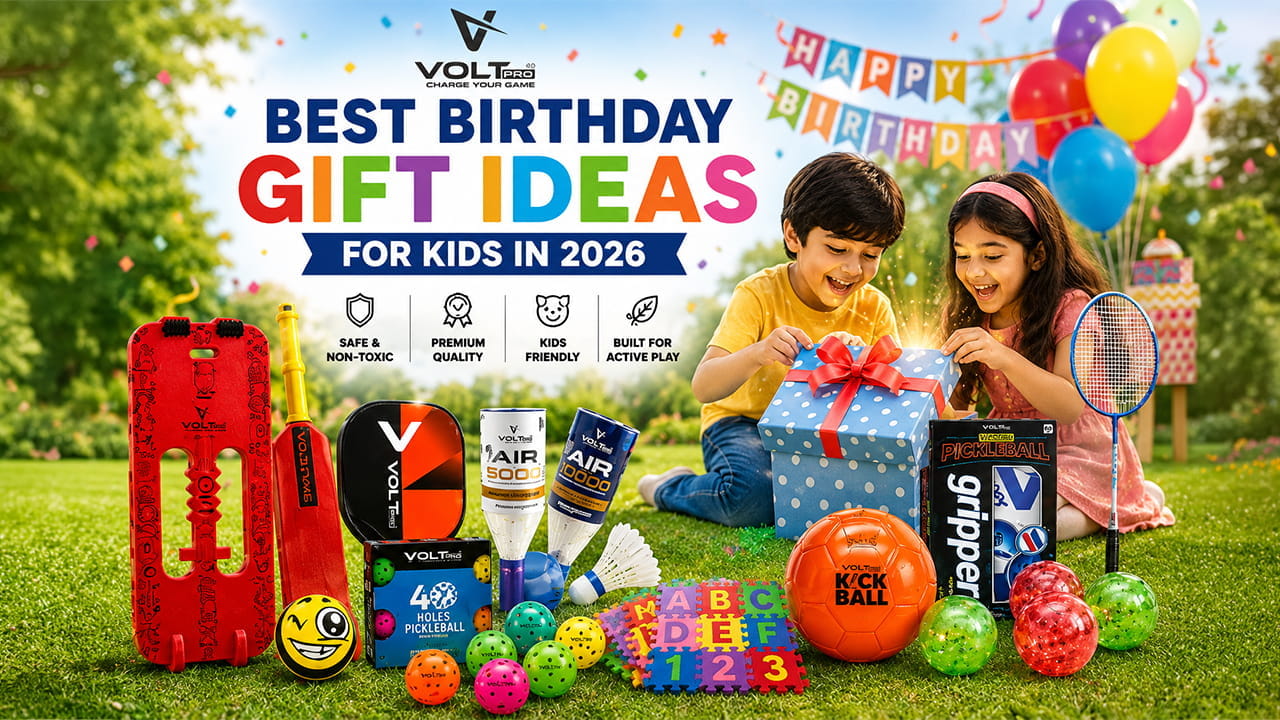
The invite says the party’s on Saturday. It’s now Thursday night, and you’re scrolling through a dozen browser tabs trying to figure out what a 7-year-old you’ve met twice actually likes. Sound familiar? Every parent ends up here eventually, standing in a toy aisle or an app, stuck somewhere between “too babyish” and “their parents will quietly resent me for this.” The good news is that most great birthday gift ideas for kids in 2026 follow a fairly predictable pattern once you know what to look for. This guide breaks it down by age, walks through how much you actually need to spend, and even covers the distinctly Indian curveball of return gifts for the other kids at the party.
What Actually Makes a Birthday Gift Memorable?
Quick answer: a gift that matches where the child actually is developmentally, not just their age in years; reflects something specific about them rather than generic “kids stuff”; and isn’t something three other guests are also likely to bring. Hit those three, and you’re most of the way to a gift that survives past the unwrapping. The other quiet rule: open-ended toys, the kind that can be played with a dozen different ways – tend to outlast trend-driven ones by years, not months. A toy that only does one thing usually gets put down the same week it stops being novel.
What Are the Best Gifts for Babies and Toddlers (0–2 Years)?
At this age, the gift is often as much for the parents as for the child. Sensory toys, soft cloth books, stacking rings, shape sorters, and simple push-and-pull toys build the fine motor skills and cause-and-effect understanding this age group is wired to chase. A first birthday in particular tends to lean toward keepsake-adjacent gifts, a soft comforter, a sturdy wooden walker, or anything built to survive being thrown, chewed, and sat on, repeatedly, for the next year. Skip anything with small, detachable parts entirely at this age: it’s the one rule worth never bending, and worth checking even on gifts that look perfectly age-labelled on the box.
What Should You Buy for Preschoolers (3–5 Years)?
This is prime pretend-play territory. A dress-up box with two or three costumes, a play kitchen or tool set, art supplies that go beyond basic crayons, or a first tricycle or balance bike tend to land well, because three-to-five year-olds are actively building the make-believe skills role-play toys are designed around. Construction sets with larger, chunkier pieces also start to make sense here, bridging from toddler stacking toys into real building.
What Are Good Birthday Gifts for Kids Aged 6-8?
This is where interests start to sharpen into specifics, and gifts can follow. Puzzles, STEM and science kits, construction sets with smaller and more complex pieces, board games the whole family can actually play, and a first proper bicycle, prices typically start around ₹3,000 and climb with features all tend to perform well here. Remote-control toys remain a reliable favorite across this entire range, for kids who want something that does more than just sit still.
What Do Tweens (9–12) Actually Want?
Less generic “toy,” more “gear for something they’re already into.” A tween who loves art gets a proper sketch set, not a basic coloring book. One into cricket or badminton gets equipment that actually performs, not a toy version of it. Books matched to a specific interest, beginner hobby kits, and personalized items, a journal with their name, gear tagged for their bag, tend to land better than anything generic at this age, because they signal you actually paid attention to who this particular kid is.
Are Experience Gifts Actually Better Than Toys?
Often, yes and there’s real research behind that instinct. Across decades of studies, psychologists, most notably Cornell’s Thomas Gilovich, have found that people draw more lasting happiness from experiences than from possessions, largely because we adapt quickly to a new object while a good memory keeps getting re-savored. For a birthday, that makes a class booking, a day trip, or tickets to something they’ve been asking about a genuinely strong option, especially for a kid who already has plenty of toys.
The one practical catch: an experience can feel abstract to a young child on the actual morning of the party, when they want something to physically unwrap. The easy fix is pairing it with a small keepsake, so there’s something to open and something to look forward to.
How Much Should You Actually Spend on a Kid’s Birthday Gift?
There’s no fixed rule, but a few benchmarks help. At the lower end, ₹500–1,000 reliably covers solid books, art supplies, or smaller toys. ₹1,500–3,000 opens up STEM kits, construction sets, and better-built toys that actually last. Above that, you’re typically looking at bicycles, larger ride-ons, or sports equipment, where ₹3,000 and up is the realistic starting point for something built to survive more than one outing. For a classmate or casual acquaintance, the lower end is completely appropriate, the gift doesn’t need to be impressive, just thoughtful.
₹ 250–500 is the typical return-gift budget per child for a larger Indian birthday party rising to ₹700–1,000 for smaller or more premium gatherings.
What About Return Gifts for the Other Kids at the Party?
A genuinely Indian wrinkle that most gift guides skip entirely: the small gifts going out to every other child at the party, not just the birthday child’s main present. A common, budget-friendly approach is bundling two or three small items, stickers, a mini puzzle, stationery: into one colourful pouch rather than buying single pricier items, which tends to feel more generous without actually costing more. A few rules that hold up across most Indian birthday parties: Buy roughly 10% more than your confirmed guest count, siblings and last-minute additions are basically guaranteed. Avoid the same hazards as any toy: small detachable parts for a toddler-heavy guest list, loud battery toys, and flimsy plastic that breaks before the car ride home. A small personal touch: the child’s name, the date: turns an otherwise generic bag into something guests actually keep.

What Birthday Gifts Should You Avoid?
A short list worth keeping in mind before you check out: Anything without a visible BIS/ISI safety mark, especially for younger children: worth a quick check regardless of how the packaging looks.
Toys that need batteries “not included,” when you already know the household won’t have spares lying around that day.
Generic stuffed animals or character merchandise as the sole gift for a child you don’t know well – this is one of the most duplicated gift categories at most parties.
Anything genuinely loud, for the sake of whichever adult has to live with it for the next six months. A gift two age-bands “ahead” of the child, chosen because it seemed more impressive than something actually age-appropriate.

Frequently Asked Questions
Q. What’s a good, safe choice for a kid I don’t know very well?
Stick to broadly appealing, open-ended categories: art supplies, a well-reviewed puzzle, a board game, or a book matched to their general age band. These rarely clash with a specific child’s tastes and are unlikely to duplicate something they already own in exactly that form.
Q. Is it better to give one nice gift or several small ones?
Either works, but matches it to the relationship. A close family can usually justify one higher-value gift; a classmate or casual acquaintance is better served by something modest and thoughtful than something expensive enough to overshadow the host’s own planning.
Q. Are gift cards a good birthday gift for kids?
For tweens with their own interests and some independence, yes: they let the child choose exactly what they want. For younger children, a gift card is functionally a gift for the parents, since the child can’t act on it themselves; a physical gift usually lands better at that age.
Q. How do I avoid giving a duplicate gift?
Ask the parents directly, or check if there’s a wish list: most parents are relieved to be asked rather than offended. If that’s not possible, leaning toward consumable or personalized categories naturally reduces duplication risk compared to generic toys.
Q. What return gift budget is normal for an Indian birthday party?
Most larger parties budget roughly ₹250–500 per child, while smaller or more premium gatherings sometimes go up to ₹700–1,000. Bundling two or three small items into one bag is a common way to feel generous while staying well within that range.
Q. Are experience gifts appropriate for very young toddlers?
They can be, but the abstraction is harder for a child under two or three to appreciate on the day itself. Pairing the experience with a small physical item to unwrap usually works better for this age than the experience alone.
Q. Should I check with the parents before buying a gift?
For anything beyond a small, low-cost item, yes: particularly around allergies, screen-time preferences, or toys the family has specifically chosen to keep out of the house. A quick message is rarely seen as intrusive; most parents appreciate it.
The Bottom Line
There’s no universal “best” birthday gift: only the best gift for that specific child, at that specific age, from someone who clearly paid a little attention. Match the gift to where they actually are developmentally, lean toward open-ended over single-purpose, and don’t underestimate how far a thoughtful return gift goes toward making the whole party feel well-hosted, not just the headline present.