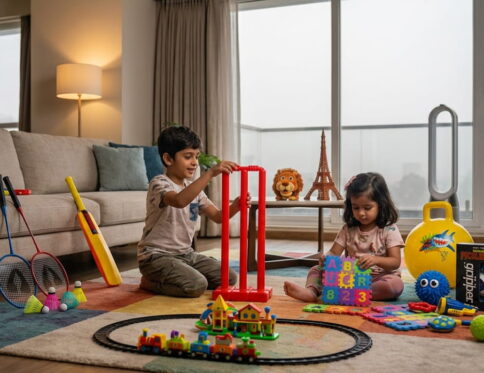


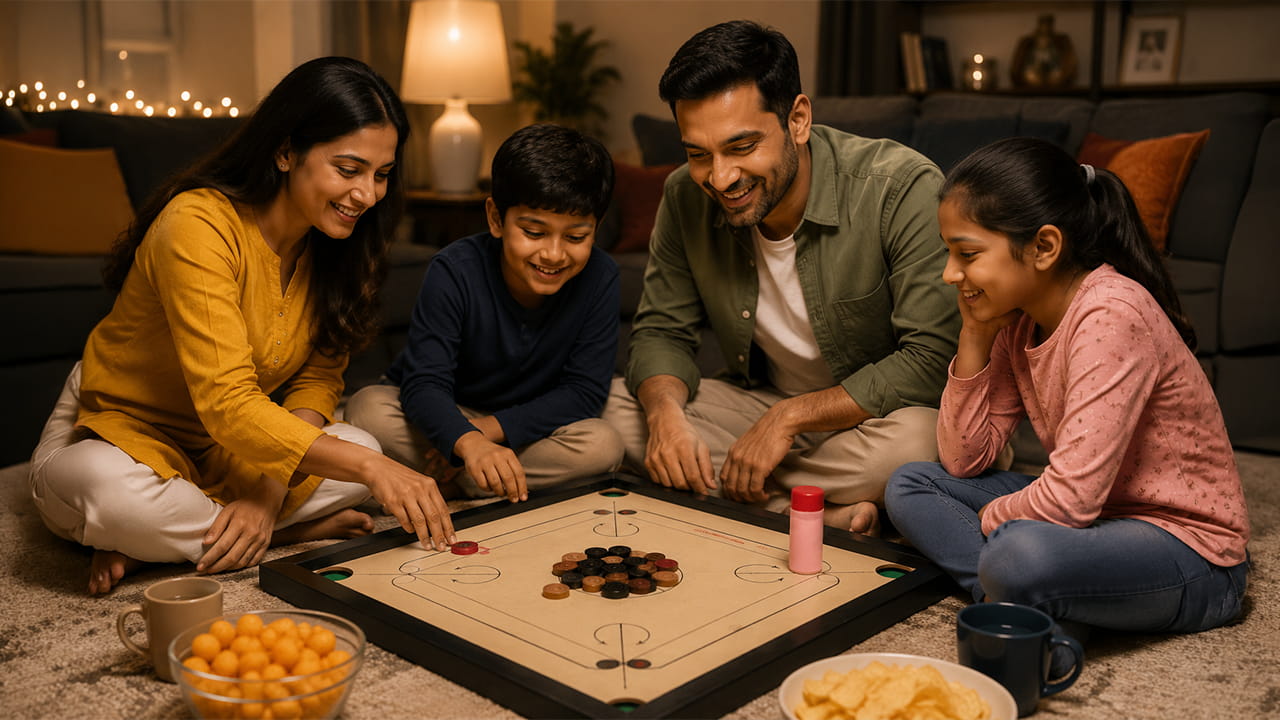
Board game cafes are opening across Delhi NCR, Bengaluru and Chennai, classic games are flying off shelves, and the research says this “simple” ritual is doing more for your family than anyone gives it credit for. It’s Sunday evening. The whole family is in the same room – and everyone is looking at a different screen. Sound familiar? Across Indian homes, families are starting to push back against this, and they’re doing it with something that feels almost old-fashioned: a board game on the dining table. Family board game night has had a real comeback in 2026, and it isn’t just nostalgia talking. Here’s what’s actually behind the comeback, what the research says it’s doing for kids, and how to start a game night at home that doesn’t fizzle out after round one.
Why Is Family Game Night Trending Again in 2026?
The numbers are hard to ignore. The global board game market crossed $18.5 billion in 2024 and is on track to more than double by 2034. The family board game segment alone is projected to grow from $13.1 billion to $22.3 billion by 2032. It isn’t just about buying games either – people want somewhere to play them. The global board game café market, valued at roughly $1.27 billion in 2024, is projected to nearly double to $2.5 billion by 2032
India has caught the same wave. Board game cafés have opened across Gurugram, Bengaluru and Chennai in the last couple of years, mixing modern hits like Catan and Ticket to Ride with desi classics like Ludo, Pachisi and Navakankari on the same shelf. The pattern repeats everywhere: people are tired of infinite scrolls and autoplay, and they’re willing to put their phones away – even pay for the privilege – to get a few real hours of attention back
What Does Research Say About Board Games and Child Development?
This isn’t just a feel-good trend – there’s real developmental science behind it.
DID YOU KNOW?
Harvard’s Center on the Developing Child has a name for the back-and-forth exchanges that happen during play – “serve and return.” Every time your child rolls the dice, makes a choice, and you respond by asking a question or celebrating a move, that exchange is part of how a child’s brain architecture actually gets built.
It’s not just theory, either. A 2021 study published in the Scandinavian Journal of Psychology found that both competitive and cooperative board games increased prosocial behaviors in preschoolers – more sharing, more complimenting, more helping each other out. Separate research has found that simple number-based board games support 5-year-olds’ early math development, and researchers at Carnegie Mellon University have shown that even small amounts of practice with academic-style games can improve classroom performance. None of this requires an expensive or complicated game. It just requires turns, rules, and somebody sitting across the table.
Cooperative vs Competitive Games: What’s the Right Mix?
Not every game should be a fight to the finish. Family-leisure researchers recommend keeping at least 40% of your game rotation cooperative, games where everyone wins or loses together. The other 60% can be friendly competition, the kind of games where there’s one clear winner and a rematch demanded five minutes later.
The mix matters because each type teaches something different. Cooperative games build sharing and teamwork, and they’re the better starting point for younger kids and mixed-age tables. Competitive games build strategic thinking and the harder skill of losing gracefully – worth saving for once your child can handle it without a meltdown.

Is This Really About Bonding, or Just Nostalgia?
A bit of both: but the bonding part is backed by more than just warm feelings. A 2025 study in the journal Family Relations looked at how three generations, children, parents and grandparents, experience board games together, and found that all three groups saw real value in it, just for different reasons: kids got to process emotions in a low-stakes setting, parents got a tool to actively support their child’s development, and grandparents got a way to connect with grandchildren across a real generational gap. Regular, predictable game nights also do something else, they create a sense of routine that researchers say helps children feel more secure, especially during stressful periods. It’s a tradition you can build on purpose, not one you have to wait decades for.
How to Start a Family Game Night That Doesn’t Fizzle Out
Most family game nights don’t fail because of a bad game choice. They fail because of friction, confusing rules, mismatched ages, or competitiveness that goes too far. Four things consistently make the difference.
Build Your Own Family Game Night
Let’s Play’s family activity range is built for exactly this kind of together-time, simple enough for a quick weeknight round, engaging enough that nobody reaches for their phone halfway through. Explore Let’s Play: megaplayindia.com
Why This Matters Even More in 2026.
India’s screen-time conversation has gotten louder, and it isn’t unfounded, but the answer most parents are reaching for isn’t a ban, it’s a replacement. A board game gives a family the same pull a screen has, turns, small rewards, a bit of competition, without the scrolling. That’s likely why this comeback has legs instead of being a passing trend: it doesn’t ask anyone to give something up. It just gives families something better to do with the same hour.

Frequently Asked Questions
Is family board game night actually good for kids, or is that overstated?
Research backs it up. Studies link board games to increased prosocial behavior, early math skills, and stronger parent-child interaction patterns. The benefit is real, not just anecdotal.
What age can kids start playing board games?
Simple games with big pieces and few rules work from around age 3–4. Strategy-based games become easier to follow from age 6–7 onward.
How often should a family have game night?
Weekly or fortnightly works best for most families, frequent enough to become a routine, infrequent enough that it doesn’t feel like a chore.
Should games be cooperative or competitive?
A mix works best. Aim for roughly 40% cooperative games and 60% competitive ones, leaning more cooperative when younger kids or grandparents are at the table.
What if my child gets upset when they lose?
That’s normal, especially early on. Lean into cooperative games first, and use competitive games as a gentle, supervised way to practice handling a loss over time.
Are board games actually better than screen time?
They’re different rather than strictly “better.” Board games offer face-to-face interaction and turn-taking, the kind of back-and-forth exchange that builds social skills in ways passive screen time doesn’t.
Do I need expensive games to make this work?
No. Simple, inexpensive games work just as well as elaborate ones for bonding and development. What matters is regular play, not the price tag
Conclusion
Family board game night isn’t back because of nostalgia alone – it’s back because it solves a problem screens created in the first place: everyone in the same room, nobody actually together. Pick one night, pick one game, and put the phones in another room. That’s the whole trick.
Ready to build a game-night habit your family keeps?
Explore Let’s Play’s family activity range – built by Shakti Rubber Industries, trusted by Indian families since 1964.