


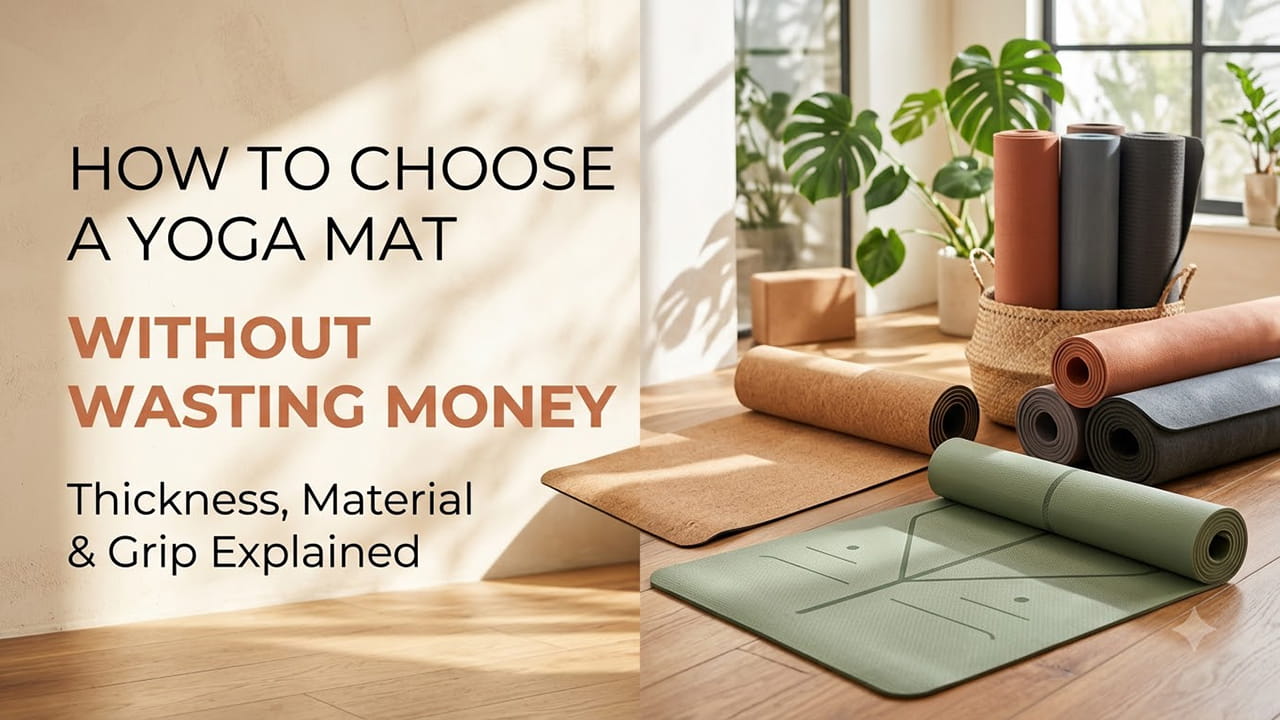
For most home yoga and floor workouts, choose a 4mm anti-slip mat in the standard 24 x 72 inch size. TPE mats are light, grippy and easy to clean. Choose a thicker mat only if you mostly do floor stretches and have sensitive knees, because very thick mats make balance poses harder.
Here’s a story you might recognise. You decide to start yoga. You buy the thickest, softest mat you can find, because thick must mean comfortable, right? Day one, you try tree pose. You wobble. You sink. You fall over. Day three, your hands slide forward in downward dog. By day ten, the mat is rolled up behind the sofa.
The problem wasn’t you. It was the mat.
Knowing how to choose a yoga mat saves you money and, more importantly, keeps you practising. Let me walk you through what really matters.
What thickness should a yoga mat be?
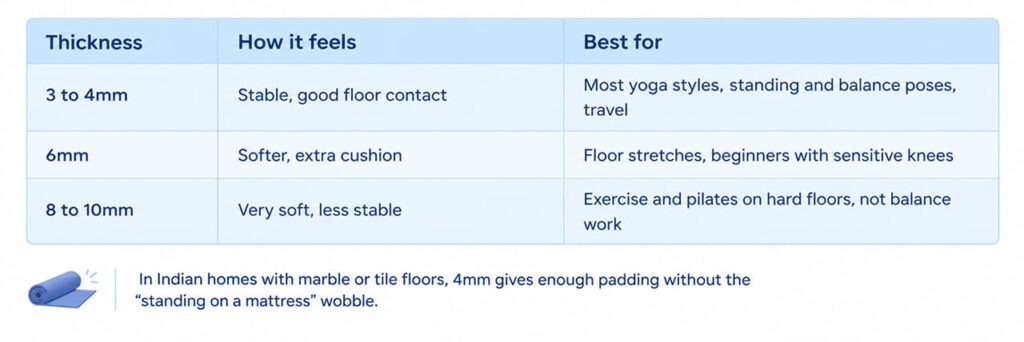
For most people, 4mm is the sweet spot. It cushions your knees and wrists on hard floors while still keeping you stable in standing and balance poses.
Here’s how the common thicknesses compare:In Indian homes with marble or tile floors, 4mm gives enough padding without the “standing on a mattress” wobble.
What is the best material for a yoga mat?
TPE is a great all-round choice for home users. It’s light, cushioned, grippy and easy to wipe clean.
Here’s a quick look at the main options:
- TPE (thermoplastic elastomer): Light, comfortable, good grip, easy to clean. Ideal for home practice.
- PVC: Durable and budget-friendly, but heavier and often slippery when sweaty.
- Natural rubber: Excellent grip, but heavy, and not suitable for anyone with a latex allergy.
The Volt Pro 4mm anti-slip TPE yoga mat (24 x 72 inch) is made for men and women who want a light, grippy mat for daily practice. Pick your favourite colour: blue, green, orange, pink or purple.
What size yoga mat do you need?
The standard size, 24 x 72 inches (about 61 x 183 cm), fits most adults up to around 6 feet tall.
If you’re taller, put a small towel at the head end for lying poses. And don’t forget to measure your space. You need a little room on each side to stretch your arms without hitting the sofa.
Why is grip so important for yoga in India?
Because we sweat. A lot. Especially in humid cities and long summers.
When hands slip in downward dog or plank, you lose your form and risk straining your wrists. A mat with an anti-slip surface on both sides keeps your hands in place and stops the mat sliding on smooth floors.
Still slipping in a hot room? Lay a thin cotton towel over the mat for intense sessions. It’s an old trick that works.
Should you buy a printed yoga mat or one with a carry bag?
If you practise at a park, class or gym, a carry bag is worth it. If you practise at home, a printed design can help with alignment and, honestly, makes rolling out the mat a little more inviting.
The Volt Pro UV printed yoga mat with carry bag gives you both in the same 24 x 72 inch, 4mm format.
How do you clean and care for a yoga mat?
A clean mat stays grippy longer. Follow these simple steps:
- Wipe it down after every session with a damp cloth.
- Once a week, clean it with mild soap and water. Skip harsh chemicals and oils.
- Dry it in the shade. Strong sunlight can fade and harden the surface.
- Roll it with the top side facing out so the edges stay flat.
Can kids use a yoga mat too?
Yes, and they should. Kids’ yoga builds balance, flexibility and focus, and it’s one of the best activities for high-AQI winter days. See our list of indoor games for kids at home.
If you’re combining yoga with other activities for fitness, our guide to 10 exciting sports to lose weight naturally has more ideas.
Frequently asked questions
Is a 4mm yoga mat good for beginners?
Yes. It gives enough cushion for the knees and enough stability for balance poses.
Which is better, a TPE or PVC yoga mat?
TPE is lighter and usually grippier. PVC is heavier but very durable. Most home users prefer TPE.
What is the standard yoga mat size?
24 x 72 inches, which is about 61 x 183 cm.
How do I stop my yoga mat from slipping?
Use an anti-slip mat on a clean, dry floor, and add a towel if your hands sweat a lot.
Can I use a yoga mat for home workouts?
Yes. A 4mm mat works well for stretching, core exercises and bodyweight workouts.
How often should I replace my yoga mat?
When it starts flaking, loses its grip, or stays flattened where your hands and knees go.
Is a thicker yoga mat always better?
No. Very thick mats feel soft but make balance poses much harder.
Conclusion: The right mat keeps you coming back
The best yoga mat isn’t the thickest or the most expensive. It’s the one you actually want to roll out every morning. For most people, that means a 4mm, anti-slip, standard-size mat that’s light enough to move and grippy enough to trust.
Get that right, and the rest, the flexibility, the calm, the habit, follows naturally.
Start your practice on the right mat. Browse the Volt Pro yoga range. Pick a colour, roll it out tomorrow morning, and give it two weeks.